 Semblance
Looksmaxxing
How to Improve Your Side Profile.
In short
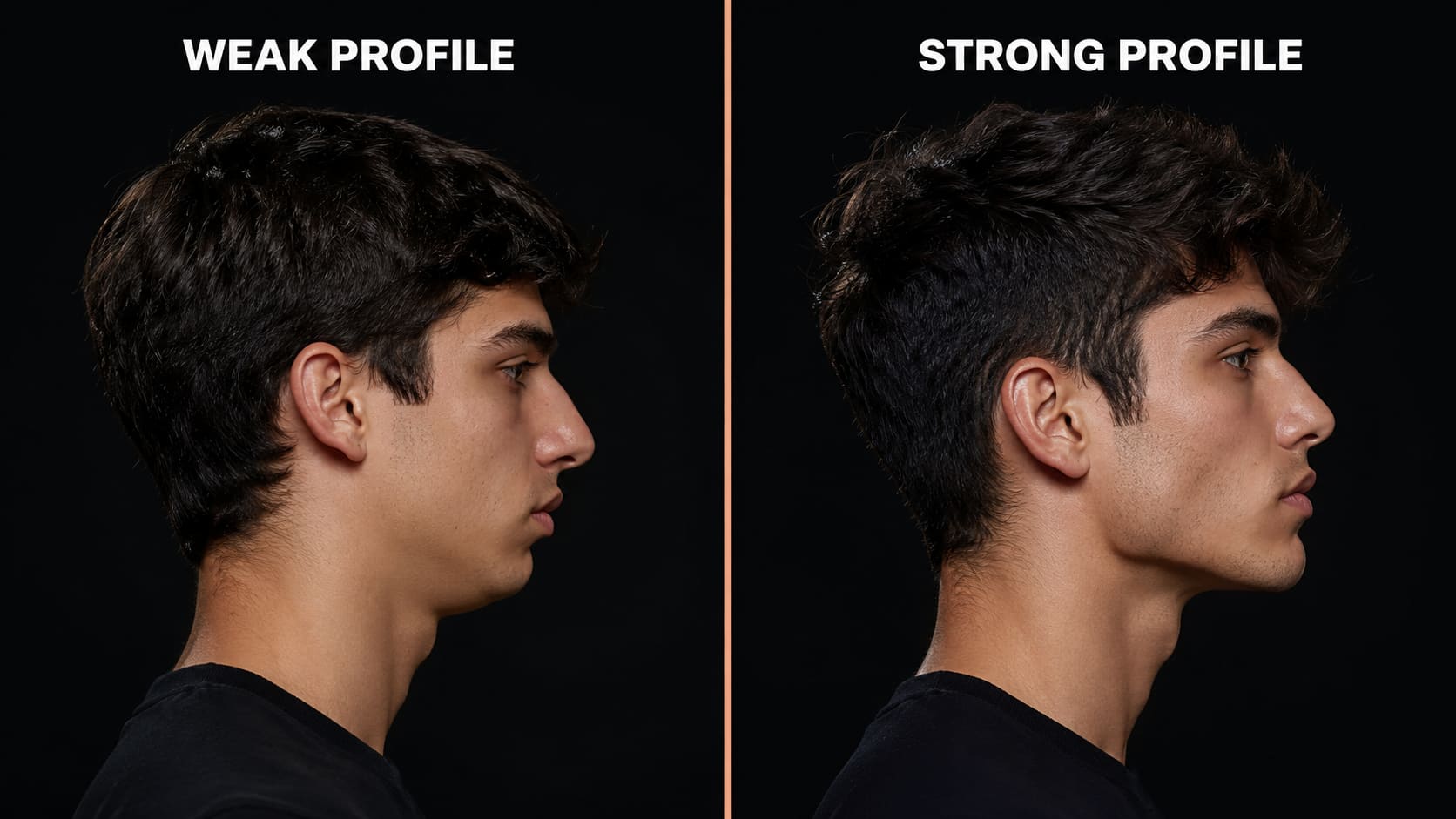
The side profile is shaped by three features: the nose, the chin, and the jaw angle. Most people with a weak profile have one clear issue — a recessed chin is the most common, followed by a nose that breaks the profile line, followed by a jaw with no clear angle or neck separation. Body fat reduction can reveal bone structure that already exists. Meaningful structural change to the profile requires a procedure: rhinoplasty, genioplasty, chin implant, jaw implant, or filler.
What makes a good side profile?
A strong side profile has three features in balance. The forehead, nose tip, lips, and chin should fall on or near the same vertical line (the Ricketts E-plane). The jaw should have a clear angle with visible separation from the neck. The nose should not dominate the profile — tip projection and bridge height should be proportional to the overall face length.
When one of the three features is out of alignment, the whole profile reads as weak — even if the front view is average or above. This is why some people rate differently face-on versus from the side.
What is pulling your profile down?
The three structural levers — and what each one affects.
Chin
A recessed or underprojected chin is the most common profile issue. It shortens the lower third and removes the clear separation between jaw and neck. Chin projection is what makes a profile "snap" into balance — adding it is the single highest-impact structural change for most people with a weak profile.
Jaw angle
The jaw angle (gonial angle) determines how clearly defined the transition from jaw to neck is. A high gonial angle means a soft, rounded jaw with no visible corner. A lower gonial angle creates the sharp jaw-to-neck separation that reads as masculine and defined. Body fat hides whatever angle is there — leanness reveals it.
Nose
A dorsal hump (bump on the bridge) is the most common nasal profile issue — it breaks the straight line from forehead to tip. A drooping tip adds visual length to the nose and distorts the profile balance. Both are addressed by rhinoplasty. Fillers can smooth a minor hump temporarily but cannot fix a drooping tip.
Can you improve your side profile without surgery?
Body fat reduction is the only non-surgical lever that materially changes the side profile. Fat stored around the chin and lower jaw compresses the neck-jaw separation and softens the jaw angle. Cutting to 10–15% body fat can reveal a defined jaw angle that was always there structurally but not visible.
Mewing — correct tongue posture against the palate — may contribute to forward maxillary growth in younger people and has some effect on the chin and jaw position over years. The evidence is stronger in adolescents than in adults.
A recessed chin, underprojected jaw, or nasal hump are structural. No skincare, posture fix, or supplement changes them.
What procedures improve the side profile?
Ranked by profile impact.
Surgical repositioning of the chin bone — moves it forward, back, or vertically. The most precise correction for chin recession and the only option that addresses all dimensions of chin position. Permanent.
A silicone implant placed over the chin bone to increase projection and width. Simpler than genioplasty for straightforward projection increases. High profile impact for the most common weak-link issue.
Nose surgery that reshapes the bridge, tip, and overall nasal profile. Addresses dorsal humps, drooping tips, and asymmetries. The most impactful procedure for nose-driven profile issues and one of the highest-impact procedures in facial aesthetics overall.
Implants placed at the jaw angle to increase its definition and create a sharper jaw-to-neck separation. Most impactful for those with a high gonial angle and naturally round lower face. Changes the jaw angle read from the side and the three-quarter view.
Hyaluronic acid filler injected into the chin to add projection and definition. Temporary — typically six to eighteen months. A reversible way to preview the effect of chin augmentation before committing to an implant or genioplasty.
Repositioning of the jaw bones (maxilla and mandible) for significant jaw recession or bite imbalances. The definitive correction for structural jaw-profile issues that go beyond what implants can address. Typically combined with orthodontics.
Before committing to any of these, seeing what a specific change would look like on your actual profile is the clearest diagnostic step. Semblance generates a realistic AI preview from one photo — jaw definition, rhinoplasty, or chin augmentation on your own face.
Preview it on your own face →◇ AI-generated visualization for exploration only — not medical advice or a guaranteed outcome.
Side Profile FAQ
Common questions.
What makes a good side profile?+
A good side profile has the nose, chin, and jaw in balance. The forehead, nose tip, lips, and chin should fall near the same vertical line. The jaw should have a visible angle with clear separation from the neck. The nose should be proportional — not dominating the profile or breaking its line.
How can I improve my side profile naturally?+
Body fat reduction is the most effective non-surgical method. Fat stored around the chin and lower jaw softens the jaw angle and hides the jaw-to-neck separation. Cutting body fat reveals existing bone structure. Mewing (correct tongue posture) may help younger people over a long timeline. Bone structure itself cannot be changed without a procedure.
What is the most common side profile issue?+
A recessed or underprojected chin. It removes the lower-third definition and the jaw-to-neck separation that makes a profile read as strong. It is the most frequently requested target in chin augmentation procedures.
Does rhinoplasty improve the side profile?+
Yes. Rhinoplasty is one of the most impactful procedures for the side profile. A dorsal hump (bridge bump) or drooping tip breaks the profile line — rhinoplasty corrects both. It is typically the right procedure when the nose is the weak link, not the chin or jaw.
What is the difference between a chin implant and genioplasty?+
A chin implant adds projection by placing a silicone implant over the existing chin bone — simpler and better for straightforward projection increases. Genioplasty surgically repositions the chin bone and can adjust forward projection, height, and asymmetry. Genioplasty offers more precision; chin implants are the more common choice for standard projection issues.
How do I know if my chin or my nose is causing a weak profile?+
Draw a vertical line from your nose tip to your chin in a side photo. If the chin falls more than a few millimetres behind that line, chin recession is the primary issue. If the nose breaks that line significantly due to a dorsal hump or projection, the nose is the weak link. Most people can identify their main issue from a phone photo taken at profile.
Sources
- Wikipedia — Rhinoplasty
- Wikipedia — Genioplasty
- American Society of Plastic Surgeons — Rhinoplasty
- American Society of Plastic Surgeons — Chin Surgery (Mentoplasty)
Related guides